
A beautiful yard doesn’t have to mean endless weekends spent weeding, watering, and pruning. Low-maintenance landscaping is the art of designing outdoor spaces that look great year-round without demanding constant attention. Whether you’re a busy homeowner who simply doesn’t have the time, someone looking to reduce water bills, or a gardener who wants to work smarter rather than harder, the principles of low-maintenance landscaping can transform your outdoor space into something you actually enjoy rather than something you dread maintaining.
Why Low-Maintenance Landscaping Is Worth Planning From the Start
The most common landscaping mistake homeowners make is planting what looks good at the nursery without considering what it will demand over the next ten years. A yard full of high-maintenance plants, thirsty turf, and poorly planned irrigation becomes a burden, consuming time, money, and water that most households would rather spend elsewhere. Low-maintenance landscaping isn’t about doing less. It’s about making smarter design and plant choices upfront so your yard naturally requires less intervention over time.
Start With the Right Plants for Your Region
Plant selection is the single most important factor in any low-maintenance landscaping plan. Native plants are the gold standard for low-effort outdoor spaces. They’ve adapted to local rainfall, soil, and temperature over thousands of years, which means they thrive with little supplemental watering once established, require minimal fertilizing, and naturally resist local pests. Beyond natives, drought-tolerant ornamentals like lavender, ornamental grasses, sedum, and coneflower offer visual interest across multiple seasons with very little hands-on care. Match plants to your specific microclimate so they thrive. Avoid fast-growing plants that need constant trimming to stay in check. Slow-growing shrubs and groundcovers stay tidy with minimal pruning and build a more sustainable landscape over time.
Replace Turf With Smarter Ground Covers
Traditional lawns are among the most maintenance-intensive elements of any residential landscape. One of the highest-impact steps toward low-maintenance landscaping is simply reducing how much turf you have. Replacing sections of lawn with mulched planting beds, groundcovers, or hardscaping cuts down on mowing, reduces water consumption, and often looks more interesting than a sea of grass. Groundcovers like creeping thyme, clover, or liriope spread naturally, suppress weeds, and require little to no mowing once established. Where you do keep turf, choosing a grass variety suited to your climate makes a real difference. Warm-season grasses like Zoysia or Bermuda thrive in hot climates with less water than cool-season varieties, while fine fescue blends handle shade and dry conditions far better than standard bluegrass mixes.
Mulch, Irrigation, and the Systems That Make Low-Maintenance Landscaping Work
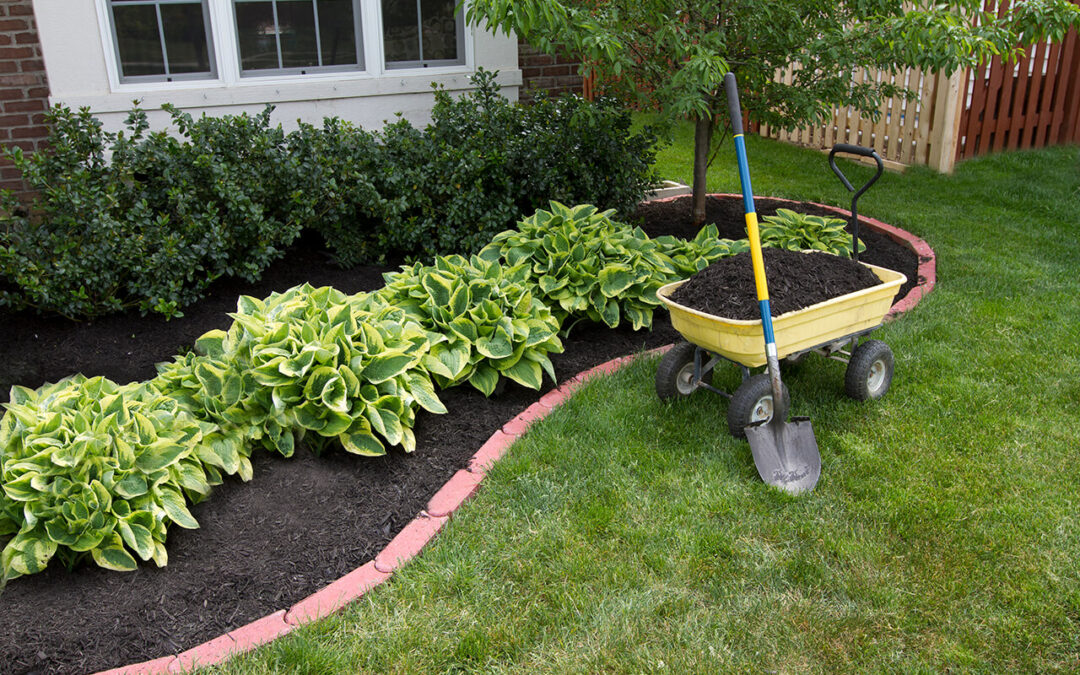
The right systems do the work so you don’t have to. Mulching planting beds to a depth of two to three inches suppresses weeds, retains moisture, regulates root zone temperature, and gradually improves soil health. Refreshing mulch once a year is far less work than weeding beds every weekend. A drip irrigation system or soaker hose setup delivers water directly to root zones on a timer, eliminating hand watering and reducing evaporation. Paired with a rain sensor, a drip system can manage your garden’s water needs almost entirely on autopilot through the growing season. Keeping bed edges clean and well-defined also reduces maintenance by preventing grass from creeping in. A clean edge refreshed once or twice a season takes far less time than repeatedly weeding an undefined border.
Design for Year-Round Interest Without Year-Round Work
A low-maintenance landscape doesn’t sacrifice visual appeal; it just requires more thought in the planning stage. Selecting plants with staggered bloom times, interesting foliage, and winter structure ensures the yard looks intentional in every season without seasonal replanting or intensive care. Evergreen shrubs and ornamental grasses anchor the design year-round. Spring bulbs naturalize over time and return on their own. Summer perennials fill out the growing season, and seed heads left standing through fall add texture while providing habitat for birds. A landscape designed with seasonal succession in mind gives you something to enjoy every month with minimal effort to sustain it.
Frequently Asked Questions (FAQs)
What is the most low-maintenance type of landscaping?
Xeriscaping is widely considered the most low-maintenance landscaping style available. It dramatically reduces water use and eliminates most recurring maintenance while still producing beautiful, layered outdoor spaces.
How do I transition my high-maintenance yard to a low-maintenance landscape?
Start by identifying the biggest time consumers and address those first. Reduce turf by converting sections to mulched beds or groundcover plantings, replace high-maintenance plants with natives over time, and improve irrigation efficiency. Low-maintenance landscaping is a gradual transition, not an overnight overhaul.
Are native plants really better for low-maintenance landscaping?
In most cases, yes. Native plants are adapted to local conditions and require significantly less watering, fertilizing, and pest management than non-native alternatives. They also support local pollinators and wildlife. The key is sourcing true natives appropriate for your specific region rather than cultivated varieties that may have lost some natural resilience.
How much mulch should I use in my planting beds?
Two to three inches is the standard recommendation. This depth suppresses weeds and retains moisture without smothering plant roots or encouraging rot at the crown. Keep mulch a few inches away from the base of shrubs and trees, and plan to refresh it once a year as it breaks down.
Does low-maintenance landscaping cost more upfront?
It can, particularly if you’re investing in drip irrigation, quality native plants, or hardscaping. However, long-term savings in water bills, lawn care, and time typically outweigh the initial investment within a few years.
St. James Home Services, Inc. provides home inspections in Durham, Alamance, Caswell, Chatham, Franklin, Granville, Orange, Person, Vance, and Wake Counties of North Carolina. If your area is not listed, please call us. Contact us to schedule our services.